Mold grows within 24–48 hours after water damage. Dry thoroughly, remove soaked materials, and increase ventilation. Call professionals for quick water damage restoration.
Imagine you come home after a big storm. After stepping into the house, you can notice a faint, musty smell. Once you have overcome the water damage, but your brain nudges you with that one question: Can mold grow after water damage? The answer is yes! Let’s walk through what it really means to help you act smart. Here you go!
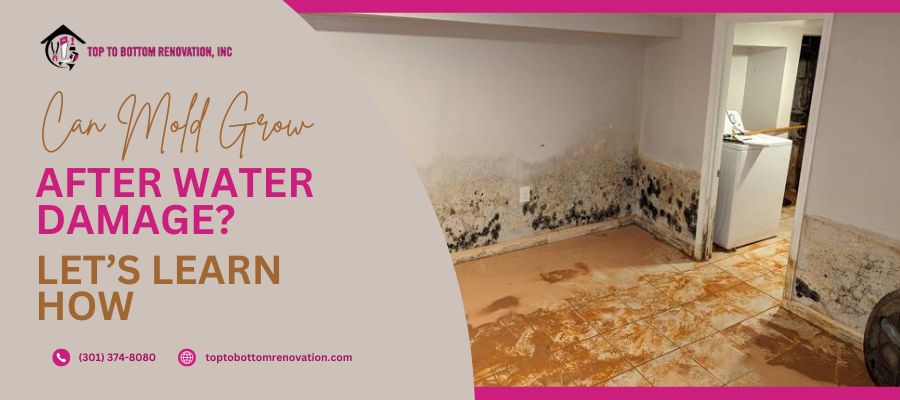
How Can Mold Grow After Water Damage? Know The Ways
Mold Loves Moisture
Mold spores are everywhere! They are small and harmless until they come into contact with water. How quickly does mold grow after water damage?
Once your surfaces stay wet for 24–48 hours, spores can start occupying the place. It means that even if you mop up a spill, there is leftover dampness inside the drywall or under the flooring. This atmosphere gives mold a perfect home.
Temperature and Food Sources
Warmth and organic materials like wood, paper, and carpet speed mold growth. A sun-warmed, humid room is a perfect place for spores.
That is why your basements, attics, and behind appliances are places where mold grows easily. Even painted drywall can hide enough organic material for mold if conditions stay damp.
Delay in Prevention and Cleanup
After the water damage, it is essential to dry everything within 48–72 hours (if possible). You can increase ventilation, use dehumidifiers, and remove soaked absorbent items.
For larger or persistent problems, professional assessment can help you ensure hidden mold is not left behind. Professional water damage restoration can reduce the chance that mold will set in.
The Hidden Damage
Sometimes, the visible damage cannot be the whole story. Water can travel anywhere and hide behind finishes. By the time you can see discoloration or smell mustiness.
It is an indication that mold may already be established in cavities or under flooring. A quick and thorough inspection is essential to stop growth before it spreads.
Opting for DIY!
Mold can trigger allergies, respiratory irritation, and asthma for some people. Plus, mold can weaken building materials, stain surfaces, and lower a home’s value.
If you are thinking about the cost of mold remediation service, the costs vary with size and extent. But you do not go for DIY, as professional service can save money and stress.
Wrapping Up!
Mold after water damage is really frustrating, but it is manageable. It is like catching a small spark before it becomes a fire. However, the right moves after water damage can protect your space and your health. If you sense trouble, contact us as soon as possible.
Leave a Reply